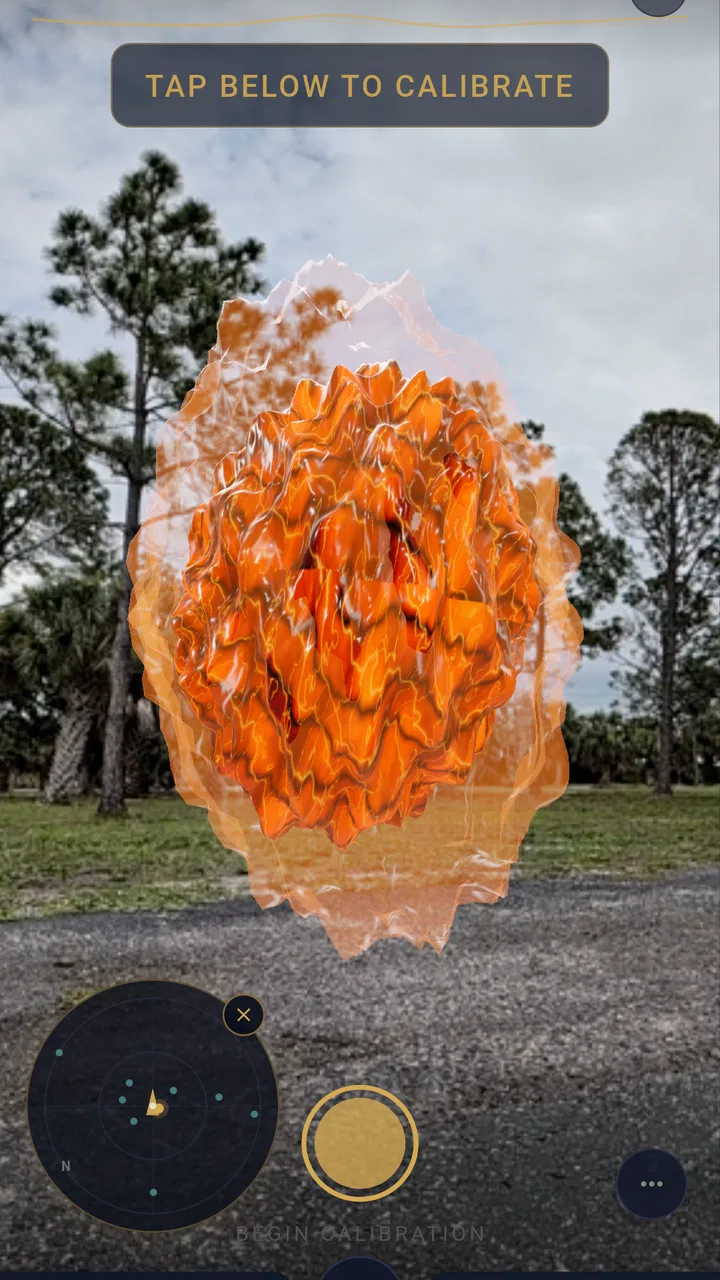
Bellweather: The Tuner
- 4.6
- Rating
- 10.00K
- Installs
- Free
- Price

 Analysis by App-foxy
I went into Bellweather: The Tuner expecting a compact adventure game, but its strongest quality is the way it turns a disappearance into something I wanted to investigate rather than simply watch unfold. The central mystery concerns Maren, who vanished in 1983, and the real-world science-fiction framing gives the story a more grounded tension than a typical fantasy quest. I was not just waiting for the next dramatic reveal; I was trying to decide which details mattered, which connections deserved another look, and when I had enough context to move forward.
That makes this a particularly interesting choice for players who enjoy patient investigation. It is free, rated for Everyone, and developed by STRATIS, INC., so it is easy to try without treating the download as a major commitment. The current release is version 0.5.4, and the game has reached a 4.6 average from a small group of players, with over 10 thousand installs. Those figures suggest a modest but interested audience rather than a huge mainstream hit, which fits the focused, experimental feel I got from it.
How I approached Maren’s disappearance
In this section, I focus on a way of approaching Maren’s case that keeps curiosity ahead of certainty. I find it helpful to decide what question I am carrying into a session before I start, so each new detail has something concrete to test. That approach also makes it easier to notice when a clue changes the shape of the investigation rather than merely adding atmosphere.
You May Also Like

 Blood Strike: 2.5 Anniversary
Blood Strike’s Loadouts Turn Every Drop Into a Tactical Gamble
A close look at Blood Strike’s custom loadouts: how fast access to signature weapons reshapes its battle royale rhythm, rewards preparation, and narrows the gap between fights.

 Pandora - Music & Podcasts
Pandora’s Music Is Easy to Start, but Harder to Recover
Pandora’s strength is its low-effort path from a seed to a station. Its weak spot is how much confidence it asks you to place in connection, setup, and quiet recovery.

 8 Ball Pool
 Is Built on Rivalries, Rematches, and Routine
A close look at the rivalries, rematches, shared routines, and unanswered safety questions that turn a quick pool match into a persistent mobile community.

 Samsung Music
’s Quiet Strength Is Playing What You Already Own
Its reach comes less from spectacle than from dependable access to a personal library. That simplicity is both the app’s strongest retention engine and its ceiling.

 AccuWeather: Weather Radar
AccuWeather Review: A Quick, Clear Forecast for Everyday Decisions
For everyday plans, the best forecast is the one you can understand quickly. AccuWeather makes rain timing, radar, and local conditions easy to act on, with a few trade-offs.

 Hill Climb Racing
Why Hill Climb Racing Still Turns Crashes Into One More Run
A tiny car, a bumpy hill and one more upgrade: Hill Climb Racing keeps resurfacing because its simple chaos makes every near-miss feel personal.
More From Our News Desk



A calm baseline workflow works best
My most reliable way to play was to treat each session like a short case file. I started by reading or examining whatever the game placed in front of me, then paused before moving on to ask what had actually changed. That small habit matters in a mystery built around a past event. If I rushed from one prompt to the next, individual details blurred together. If I stopped after each meaningful discovery, I had a much clearer sense of the questions I was trying to answer.
I also found it useful to separate facts from guesses. A reference to Maren’s disappearance may establish a time, a person, or a location, but my interpretation of that reference was still only a theory. Keeping those two levels apart prevented me from locking onto the first explanation that sounded convincing. This is one of the game’s quiet strengths: it rewards attention without requiring me to turn the experience into a formal puzzle notebook.
For a normal evening session, I would play until I reached a natural pause, then mentally summarize the investigation in three parts: what I know, what seems suspicious, and what I need to revisit. That routine is more useful here than trying to complete everything in one sitting. The story’s science-fiction mystery benefits from a little distance, because returning with a fresh perspective can make an earlier clue feel more important than it did the first time.
What the game feels like in everyday use
A realistic use case is a short commute or a quiet break when I want something more thoughtful than a quick arcade round. Bellweather: The Tuner suits that moment because its appeal comes from following an idea, not from maintaining a frantic reaction speed. I can begin by checking the current thread of the investigation, focus on the next piece of information, and stop after a meaningful development without feeling that I have abandoned a long action sequence.
That same quality may not work for everybody. If you want constant combat, rapid rewards, or a clearly marked objective at every moment, this is unlikely to become a favorite. The game asks me to pay attention to context, and that can feel slow when I am in the mood for immediate feedback. I would choose a more conventional action adventure when I want movement and spectacle to lead the experience rather than interpretation.
Why the 1983 setting changes the investigation
The 1983 disappearance is not just a decorative date attached to the premise. It gives the mystery a sense of distance and makes every attempt to understand Maren’s story feel like an act of reconstruction. I approached information differently because I was not dealing with a problem that had just happened. Time itself became part of the uncertainty: memories, records, and explanations all carry more weight when the event sits so far in the past.
I appreciated that this setup encourages questions without forcing me to accept a simple answer immediately. The science-fiction element adds another layer, but the investigation remains recognizable enough to keep the emotional stakes accessible. I was still thinking about why someone disappeared, what others may have known, and how a story changes when it is pieced together later.
Settings, habits, and the fastest way to stay oriented
I look at the small practical choices that can make a story-driven session easier to follow, especially when I am playing in brief stretches between other parts of the day. A consistent stopping point and a few carefully chosen notes can save time when I return, without turning the mystery into a chore. I also consider how to tell whether my attention is on the game or being pulled elsewhere.
The settings worth checking before settling in
Because the game depends heavily on following information, I recommend spending a moment checking the available presentation settings before beginning seriously. I would look first at text readability, audio balance, and any controls that affect how comfortably I can examine or advance through the experience. These are not glamorous adjustments, but a mystery becomes much harder to enjoy when I am straining to read or missing a line because the sound is poorly balanced.
I also prefer to test the game in a quiet environment before judging its pacing. A distracting room can make a deliberate investigation seem less engaging than it really is. If I am playing on a phone, I keep the screen free of glare and use headphones only when the surrounding noise makes spoken or atmospheric material difficult to follow. These simple choices have a bigger effect here than they would in a game where visual action communicates most of the important information.
Since the minimum operating requirement is Android 7.0, the game is accessible to owners of older compatible Android devices. I would still make sure the phone has enough free space and that other demanding apps are closed before playing, especially if the device is several years old. That is practical preparation rather than a promise of identical performance on every handset, but it helps keep the investigation from being interrupted by avoidable background activity.
Use a repeatable note-taking pattern
My most useful habit was keeping a very small set of notes outside the game. I did not transcribe every line. Instead, I wrote down names, unusual references, apparent contradictions, and questions that remained open. This approach avoids turning the experience into homework while preserving the details most likely to matter later.
A good note should describe what happened without adding a conclusion. For example, I would write that a particular detail connects Maren to a certain part of the story, rather than writing that the detail proves a theory. That distinction keeps the mystery alive and makes it easier to revise my assumptions. It is a simple technique, but it is especially valuable for players who return after several days and no longer remember which ideas came from the game and which came from their own speculation.
Shortcuts are mostly mental, not mechanical
I would not approach Bellweather: The Tuner expecting a collection of aggressive shortcut systems or a complex control scheme. The faster patterns I found were habits of attention. I learned to read the full context before tapping ahead, revisit a suspicious detail only after gathering nearby information, and stop when I reached a natural break instead of forcing progress while tired.
That may sound less exciting than a list of advanced commands, but it is appropriate for this particular game. The quickest route through a mystery is often avoiding unnecessary confusion. When I tried to skim, I created extra work for myself because I had to reconstruct the sequence later. When I slowed down for the important passages, the overall session became more efficient.
Another useful pattern is to keep one active question at a time. I might wonder what happened to Maren, then temporarily narrow that into a smaller question about a person, place, or piece of evidence. This prevents the larger mystery from becoming too vague. It also gives each session a purpose: I am not simply consuming the next scene, I am testing whether the new material helps answer the question I brought with me.
How it compares with familiar adventure games
Compared with a traditional action adventure, Bellweather: The Tuner places less emphasis on traversal, combat, and collecting. Its pleasure comes from interpretation and atmosphere. Players who usually enjoy narrative investigations, speculative fiction, or slow-burn mysteries will probably understand its appeal quickly. Players who measure progress through upgrades, map completion, or increasingly powerful abilities may find the experience unusually restrained.
It also differs from a purely linear story. Even when the game guides me toward the next part of the investigation, I still feel responsible for connecting the meaning of what I have seen. That middle ground is important: it is more approachable than a completely opaque detective game, but less passive than simply watching a science-fiction drama.
For me, the best comparison is not another specific title but two different moods. If I want to relax with a story and think about its implications, this is a good fit. If I want a game that rewards dexterity or offers a large world to explore freely, I would choose something else. Bellweather: The Tuner is narrower by design, and that focus is both its identity and its main limitation.
Where experienced players may reach the limits
Here I weigh the experience from the perspective of someone who has played plenty of adventure games and may expect a broader range of systems. The key trade-off is whether following a single, focused mystery feels absorbing or too narrow for the time spent. I also consider what kind of alternative would better suit a player looking for more action, exploration, or direct feedback.
The mystery asks for patience
The game’s measured approach can create friction. I sometimes wanted a clearer indication of which thread deserved my attention, especially when several details seemed equally suggestive. That uncertainty is part of an investigation, but it can also make progress feel less tangible than in adventure games with explicit objectives. Players who dislike ambiguity should know that the central appeal depends on being willing to sit with unanswered questions.
I also think the experience works best when I am mentally available. Playing while distracted reduces the impact of small narrative connections, and returning much later without notes can make the opening feel less immediate. This is not a game I would recommend as background entertainment. It deserves enough attention to let the mystery build.
What not to expect from the current release
The current version, 0.5.4, should be approached as a focused release rather than as proof that the game will satisfy every expectation associated with a large adventure production. Its modest install base and small review footprint match my impression that this is a title for curious early players, not a universally established blockbuster. I would try it with the understanding that the appeal lies in its concept and investigative tone, not in a massive feature set.
That distinction also affects who should skip it. If you need a long campaign, extensive customization, multiplayer activity, or a constant stream of new mechanics, this is probably the wrong download. The game is better suited to someone who values a specific mystery and is happy to let the narrative framework carry much of the experience.
Practical questions before downloading
Is it suitable for younger players? Its Everyone content rating makes it an accessible choice from an age-rating perspective, although parents may still want to consider whether a disappearance-centered mystery fits the child’s preferred tone. The subject is more thoughtful and eerie than a bright casual game, even without relying on mature presentation.
Does it cost anything to start? The game is free, which makes experimentation easy. I would still approach the download as a focused story experience rather than assuming that free automatically means endless content or a broad collection of modes. The right reason to install it is interest in Maren’s case and the game’s science-fiction investigation, not simply the absence of an upfront price.
Will it work on an older Android phone? Android 7.0 is the stated minimum, so owners of compatible older devices have a reasonable starting point. In practice, I would update the operating system where possible, close unnecessary apps, and judge the experience after a short session rather than assuming every device will behave identically.
Is it better to play in one sitting? I would not recommend forcing that. The strongest approach is to use short, attentive sessions and keep a few notes. That gives the mystery room to settle while preventing the common problem of forgetting which clues were confirmed and which were personal theories.
Who will get the most from it
I would recommend Bellweather: The Tuner to players who enjoy reconstructing events, noticing connections, and discussing possible explanations after putting the phone down. It is a good match for someone who likes science fiction with a realistic investigative foundation, especially when the story matters more than mechanical variety.
I would be more cautious with players who need immediate direction. The game can feel too quiet if you want every interaction to announce its importance. I would also steer competitive players toward another adventure game, because the satisfaction here comes from understanding rather than outperforming a rival or mastering a demanding control system.
My verdict after settling into the investigation
Bellweather: The Tuner works because it gives Maren’s 1983 disappearance enough space to remain a question. I liked that I had to participate mentally instead of waiting for the game to explain every implication. The real-world science-fiction angle makes the mystery feel unusual without making it inaccessible, and the free entry point lowers the risk for anyone curious about a smaller adventure release from STRATIS, INC.
My recommendation comes with a clear condition: play it patiently. Check the presentation settings, keep lightweight notes, separate evidence from speculation, and treat each session as one step in an investigation. Those habits make the experience more coherent and help reveal its strongest qualities. They will not transform it into an action game, nor should they; the point is to make the deliberate pace work for you.
The best reason to try it is the feeling of assembling a mystery at your own pace. The best reason to skip it is that the same restraint may feel too slow if you want constant movement or obvious rewards. For me, the balance lands on the positive side. I would recommend it to a friend who enjoys thoughtful adventure stories and does not mind leaving a few questions open while the case develops.
FAQs for Bellweather: The Tuner
01What is the main objective of Bellweather: The Tuner?
Bellweather: The Tuner is a captivating music-themed puzzle game where players must tune various musical instruments to create harmonious melodies. The objective is to solve each level by adjusting the pitch and tone to match the given musical score, offering a delightful blend of strategy and creativity.
02Is Bellweather: The Tuner suitable for all age groups?
Yes, Bellweather: The Tuner is designed to be enjoyed by players of all ages. Its intuitive interface and gradually increasing difficulty make it accessible for younger players, while the complex puzzles can challenge and engage adults. It's a perfect game for family entertainment.
03Does Bellweather: The Tuner require an internet connection?
No, Bellweather: The Tuner can be played offline, making it a great choice for on-the-go gaming. However, an internet connection is needed for initial download and for accessing certain features such as leaderboards and in-app purchases.
04Are there in-app purchases in Bellweather: The Tuner?
Yes, the game offers optional in-app purchases. These can enhance gameplay by providing additional hints, unlocking new levels, or purchasing cosmetic items. However, they are not necessary to progress through the game, ensuring a fair experience for all players.
05What platforms is Bellweather: The Tuner available on?
Bellweather: The Tuner is available on both Android and iOS platforms. Users can download it from the Google Play Store and the Apple App Store. The game is optimized for both smartphones and tablets, providing a seamless gaming experience across devices.
Pros
- Intuitive interface for easy navigation.
- High-quality sound tuning features.
- Customizable user profiles.
- Supports multiple audio formats.
- Regular updates with new features.
Cons
- Limited free features
- many are paid.
- Requires internet for full functionality.
- Occasional app crashes reported.
- Battery consumption can be high.
- Some features have a steep learning curve.

Bellweather: The Tuner
Gallery